Hurricane Season and Your AC: How to Protect Your System in South Florida
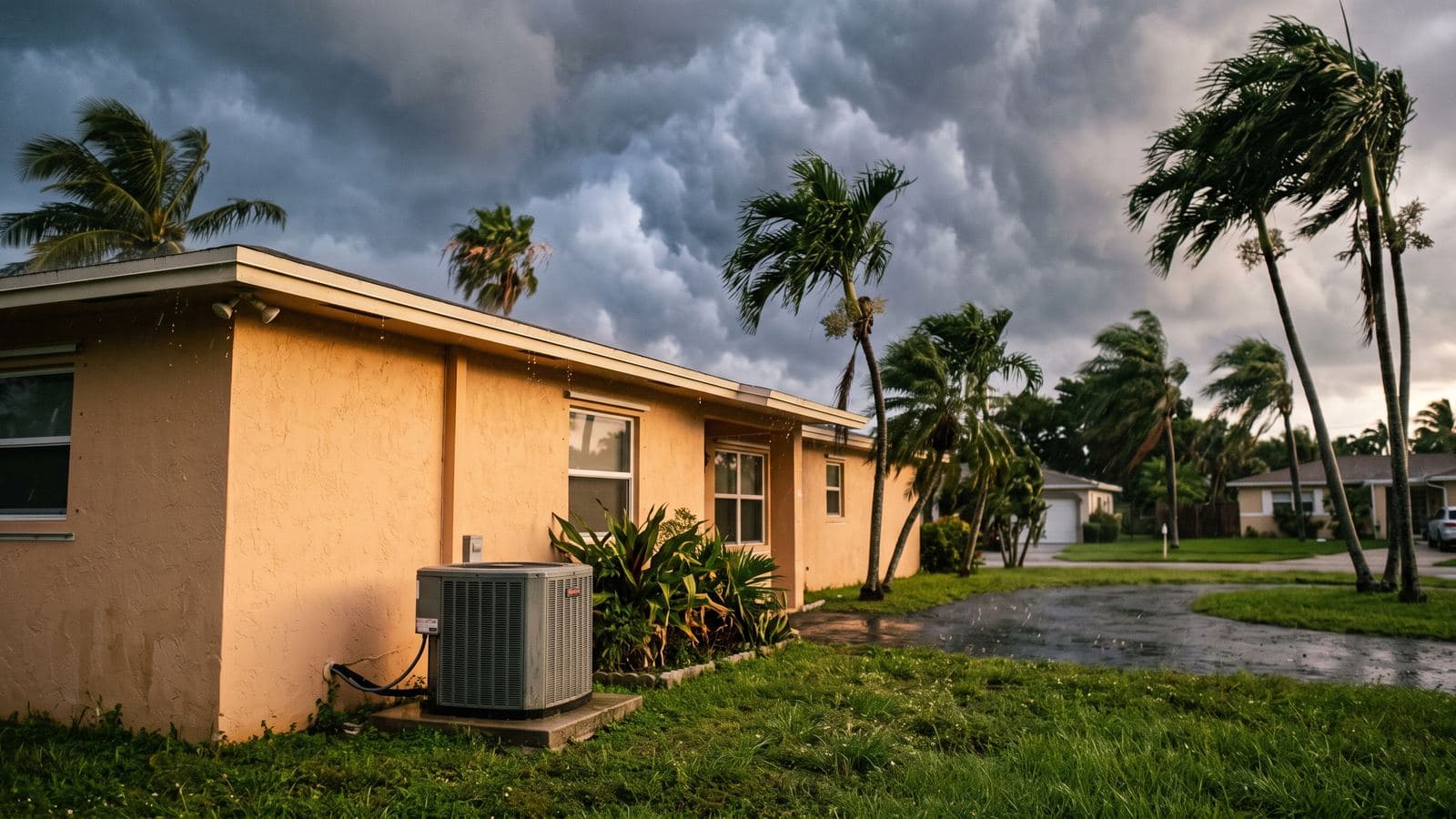
Storm Season Is Hard on Air Conditioners
Between June and November, South Florida homeowners spend a lot of energy preparing shutters, generators and supplies. The air conditioning system is usually an afterthought — right up until the power comes back on and the house will not cool.
Storms damage air conditioners in three specific ways: electrical surges when power is restored, water intrusion around the outdoor unit, and physical impact from wind-driven debris. Each one has a different fix, and none of them is complicated. The problem is that most people only think about it after the damage is done.
Before the Storm: What Actually Helps
The single most valuable step is switching the system off at the breaker once you know a storm is coming and you no longer need cooling. A system that is powered down cannot be destroyed by the surge that arrives when the grid comes back. This costs nothing and prevents the most expensive category of storm damage.
Beyond that:
- Clear loose objects from around the outdoor unit — patio furniture, planters, garden tools and palm fronds all become projectiles.
- Trim vegetation back so branches cannot fall onto the condenser.
- Confirm the unit is properly strapped to its pad. Florida code requires hurricane tie-downs on outdoor condensers, and older installations sometimes lack them.
- Photograph the system, including the model and serial plate. If you end up filing a claim, this saves an enormous amount of time.
What Not to Do
Do not wrap or cover the outdoor unit while it is running, and do not cover it tightly at all. A condenser needs airflow, and a sealed cover traps moisture against the coil, which does more damage over a season than a storm does in a day. If you want to protect the top of the unit from falling debris, a weighted board across the top is more sensible than a fitted cover.
Do not run the system during the storm itself if lightning is close or the power is flickering. Repeated brownouts are harder on a compressor than a clean shutdown.
After the Storm: Restart It Carefully
Wait until power has been stable for a few minutes before switching the breaker back on. When you restart the system, give it time — many modern units have a built-in delay of several minutes before the compressor engages, and that is normal, not a fault.
Then check three things. Is the outdoor unit sitting level and free of debris? Did floodwater rise above the base of the condenser? Is the air coming from the vents actually cold within about fifteen minutes?
If the unit was submerged even partially, do not run it. Water in the electrical components or the compressor can turn a repairable situation into a replacement. Call for an inspection first.
The Damage You Do Not See
Surge damage is rarely dramatic. More often, a capacitor or control board takes a hit and the system keeps running — just less efficiently, and with a shortened life. This is why a system that "seems fine" after a storm is still worth having checked, particularly if it is more than eight years old.
Flooding leaves a similar trail. Salt and sediment left inside the base of a condenser accelerate corrosion for years afterward. A post-storm cleaning is inexpensive compared to the coil replacement it prevents.
Planning Ahead Matters More Than Reacting
If your system is already near the end of its life, the weeks before storm season are the right time to deal with it — not the week after a hurricane, when every contractor in South Florida is booked and equipment is scarce. Our maintenance and repair services include pre-season inspections that cover tie-downs, electrical protection and drainage.
If replacement is on the table, modern Carrier systems include electrical protections and corrosion-resistant coil options that older equipment simply does not have.
Questions about your specific system? Get in touch — we serve Miami-Dade, Broward and Palm Beach counties, and a pre-season inspection takes under an hour.