Salt Air and Your AC: What Coastal South Florida Homeowners Need to Know
The Same Unit Lasts Longer Inland
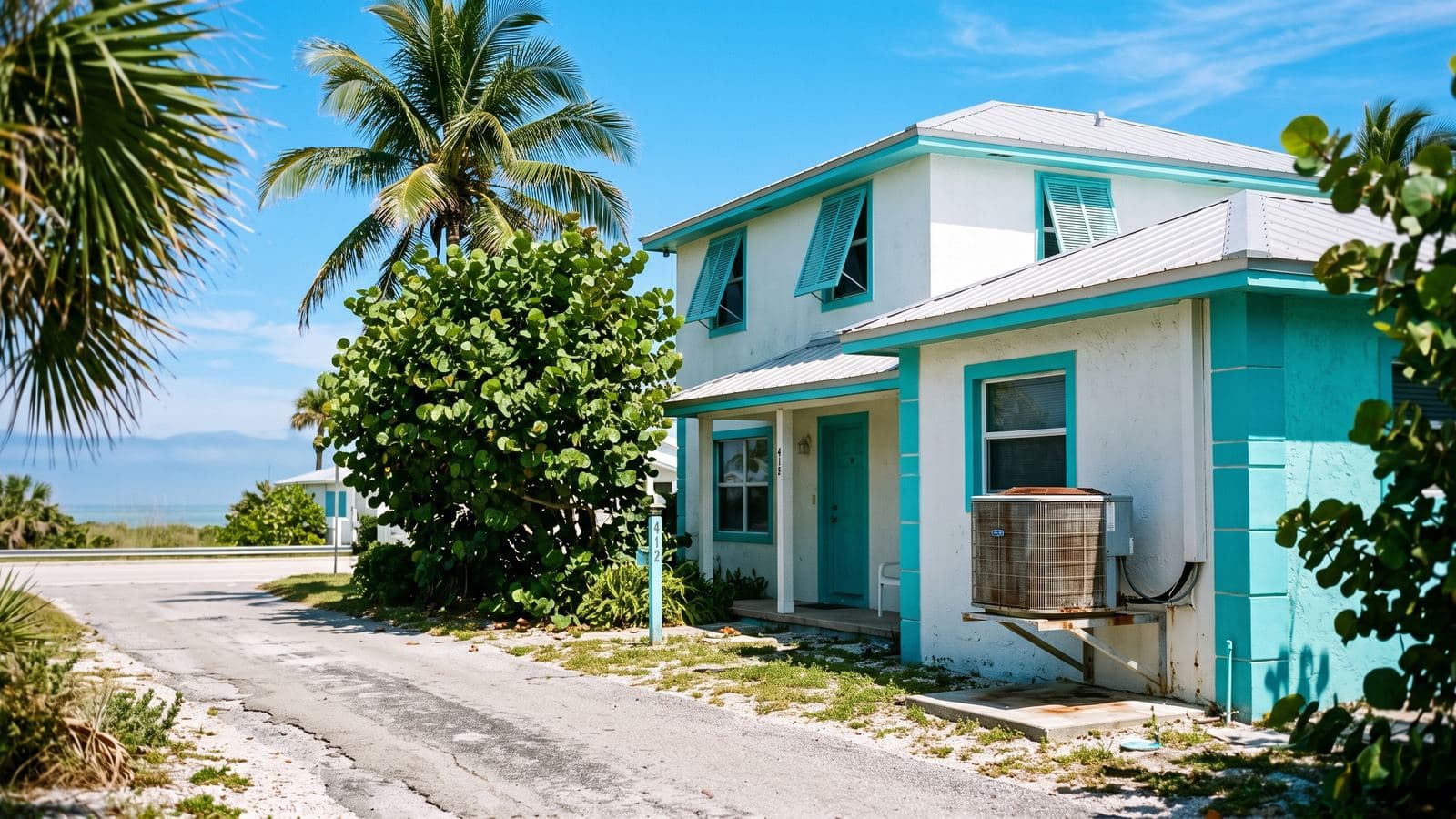
Two identical air conditioning systems, installed the same week by the same crew — one in Kendall, one three blocks from the beach in Hollywood. The inland unit will very likely outlive the coastal one by years. The difference is salt.
Airborne salt travels well inland on the ocean breeze, and it settles on everything, including the aluminum fins and copper tubing of your outdoor condenser coil. When salt, moisture and dissimilar metals meet, corrosion follows. The coil is the part that suffers, and the coil is not a cheap part.
How Salt Actually Damages a Condenser
The outdoor coil is built from copper tubing bonded to aluminum fins. That combination is efficient at moving heat and unfortunately ideal for galvanic corrosion when salt provides the electrolyte.
The visible result is a white or powdery buildup on the fins, then pitting, then fins that crumble when touched. The invisible result comes first: corroded fins conduct heat poorly, so the system works harder and longer to move the same heat, which raises electricity use and wears the compressor before anything looks obviously wrong.
Eventually corrosion reaches the tubing and produces a refrigerant leak. At that point the repair is often a coil replacement, and on an older system that cost is close enough to replacement that it forces the decision.
How Close Is Close Enough to Matter?
There is no precise line, but the effect is strongest within roughly a mile of open water and remains meaningful for several miles inland. Homes on the Intracoastal, on barrier islands, and in beachfront communities in Miami Beach, Sunny Isles, Hollywood, Fort Lauderdale and Pompano Beach all sit in the zone where this is worth planning around.
Prevailing wind matters too. A unit on the ocean side of a house takes more exposure than one tucked on the leeward side.
What Genuinely Helps
Rinse the coil regularly. This is the highest-value thing a coastal homeowner can do, and it is free. With the power off at the breaker, rinse the outdoor coil with fresh water from a garden hose — gently, and ideally from the inside out so you push debris outward rather than driving it deeper. Monthly is not excessive near the beach. Fresh water dissolves and carries away the salt before it can sit and react.
Do not use a pressure washer. The fins bend at very little force, and bent fins block airflow, which causes the same efficiency loss you are trying to prevent.
Specify coastal coil protection when you replace. Manufacturers offer coated coils and corrosion-resistant coil options designed for marine environments. On a coastal installation this is one of the few upgrades that pays for itself in extended equipment life rather than in monthly savings. Our Carrier systems include these options, and we recommend them by default within a mile of the water.
Consider placement. When a system is being replaced, there is sometimes an opportunity to relocate the condenser to a more sheltered side of the house. It is not always possible, but it is worth asking about.
What Does Not Help
Enclosing the unit in a cover or a tight screened box traps humidity against the coil and makes corrosion worse, not better. Ventilation is protection.
Skipping maintenance because the unit "looks fine" is the most expensive choice on this list. Coil corrosion is well advanced by the time it is obvious from ten feet away.
Signs Your Coil Is Already Corroding
- White, chalky or powdery residue on the aluminum fins
- Fins that flake or crumble under light pressure
- Green or blue staining on copper tubing
- Cooling that has weakened gradually over a season or two with no other explanation
- Repeat refrigerant leaks in a system under fifteen years old
Plan for It Instead of Being Surprised by It
Coastal living has a cost, and part of that cost is that HVAC equipment works in a harsher environment than the manufacturer's average assumption. That is manageable with rinsing, twice-yearly service and the right coil specification — and expensive when ignored.
We service the coastal communities of Miami-Dade and Broward daily and know what these systems look like at year five versus year ten. If you are near the water and unsure what shape your coil is in, our maintenance service includes a coil condition assessment. Get in touch and we will take a look.