Why Is My AC Blowing Warm Air? The 7 Most Common Causes in South Florida
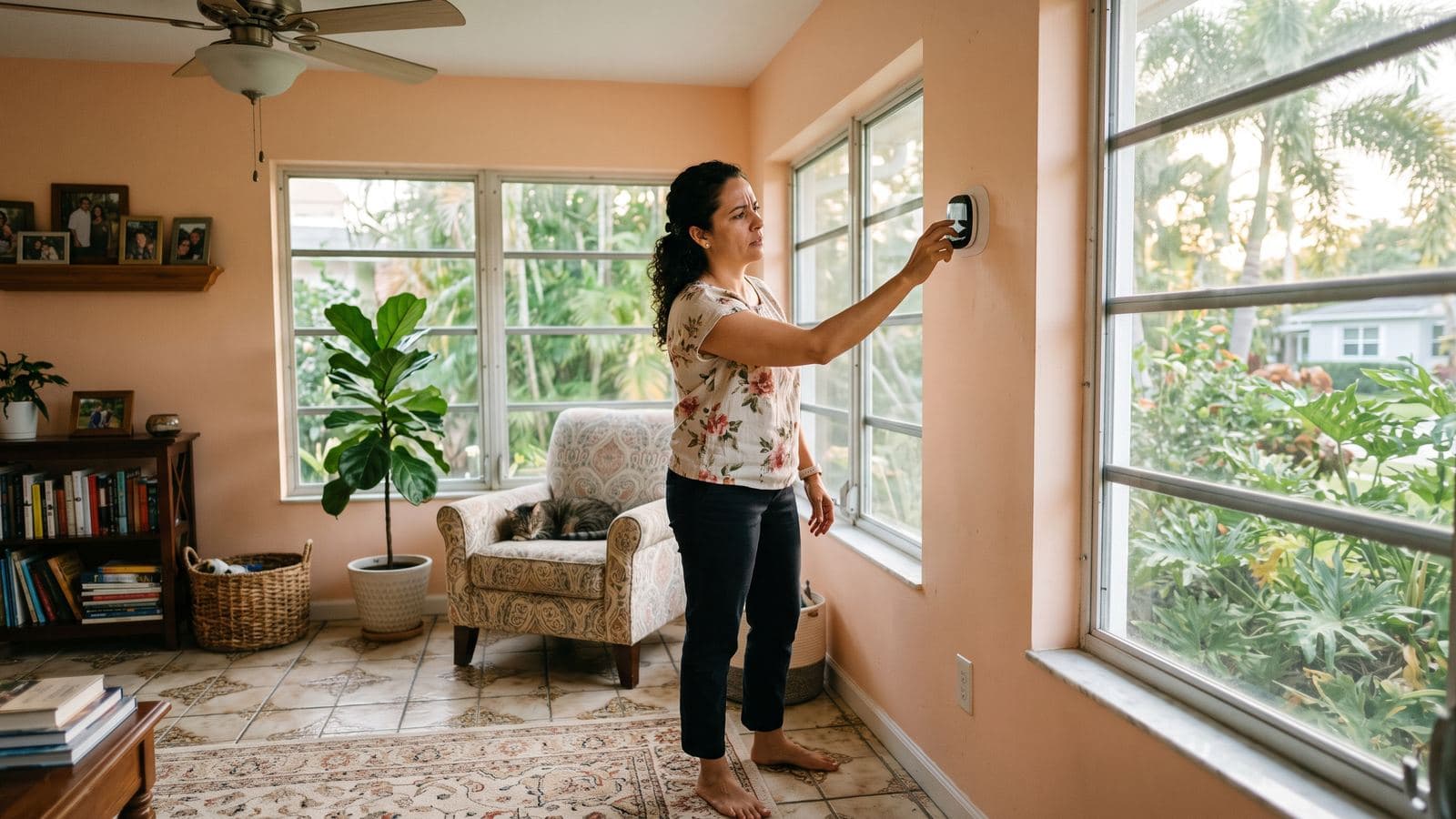
First, Rule Out the Simple Things
When an air conditioner blows warm air in the middle of a South Florida afternoon, it feels like an emergency. Sometimes it is. Often it is one of two settings that take thirty seconds to check.
Confirm the thermostat is set to Cool and not Heat or Fan. A thermostat set to Fan: On instead of Auto will circulate air continuously, including between cooling cycles, and that air will feel warm. This single setting accounts for a surprising share of the calls we take.
Then check that the temperature setting is actually below the current room temperature. A system cannot cool a room to 78 degrees if it is already 77.
1. A Clogged Air Filter
A dirty filter restricts airflow across the evaporator coil. With too little air moving over it, the coil gets too cold, ice forms, and the system stops transferring heat. What comes out of the vents is weak and warm.
In South Florida, filters load up faster than manufacturers' guidance suggests, because systems run most of the year. Checking monthly is reasonable; replacing every one to three months is typical.
2. A Frozen Evaporator Coil
If you find ice on the refrigerant line or the indoor coil, turn the system off and set the fan to On to thaw it. Running a frozen system can damage the compressor.
Ice is a symptom with several possible causes — restricted airflow, low refrigerant, or a failing blower. Thawing it gets you cooling back temporarily, but the underlying cause will freeze it again.
3. Low Refrigerant From a Leak
Refrigerant is not consumed. A system that is low on refrigerant has a leak, and topping it off without finding that leak means paying for the same repair again in a few months.
Signs include gradual loss of cooling over weeks, ice on the lines, and a hissing or bubbling sound near the indoor unit.
4. A Failed Capacitor
The capacitor gives the compressor and fan motors the jolt they need to start. When it fails, you often get the indoor fan running normally — so air moves — while the outdoor unit hums but does not start. The result is air at room temperature.
This is one of the most common failures in our climate, because heat shortens capacitor life and our systems run nearly year-round. It is also one of the least expensive repairs.
5. A Dirty Outdoor Condenser Coil
The outdoor unit releases the heat your system pulls out of the house. When its coil is packed with dust, grass clippings, dryer lint or salt residue, that heat has nowhere to go, and cooling capacity drops sharply.
Coastal homes and homes near construction accumulate this faster. Keeping two feet of clearance around the unit and rinsing the coil gently is genuinely useful maintenance.
6. A Tripped Breaker or Disconnected Outdoor Unit
Most systems run on two circuits: one for the indoor air handler and one for the outdoor condenser. If only the outdoor breaker trips, the indoor fan keeps blowing — warm air — while the compressor sits dead.
Reset a tripped breaker once. If it trips again, stop. A breaker that keeps tripping is reporting an electrical fault, not being fussy.
7. A Failing Compressor
The compressor is the heart of the system. When it fails, nothing else in the system can produce cooling. Symptoms include loud clicking or grinding, the outdoor unit shutting off shortly after starting, and no cooling at all.
On a system past twelve years old, a compressor failure is usually the moment to evaluate replacement rather than repair, because the cost of the part approaches the value of the equipment.
When to Stop Troubleshooting and Call
Check the thermostat, the filter, and the breakers. If those are all fine, the remaining causes require gauges, electrical testing and refrigerant handling, which is licensed work in Florida.
Do not keep running a system that is icing over or short-cycling — you risk turning a capacitor replacement into a compressor replacement. We offer same-day AC repair across Miami-Dade, Broward and West Palm Beach; reach out and we will tell you honestly whether it is worth repairing.