Your South Florida AC Maintenance Checklist, Season by Season
Why Generic Maintenance Advice Does Not Work Here
Most HVAC maintenance guidance assumes a system that runs hard for three months and rests for nine. In Miami-Dade, Broward and Palm Beach, the opposite is true: our systems run most of the year, and the "off season" is a handful of mild weeks.
That changes the schedule. Filters load faster. Condensate drains stay wet longer, so they clog more. Outdoor coils accumulate more debris because they are pulling air across themselves for more hours. A maintenance rhythm built for Ohio will leave a South Florida system undermaintained.
Winter and Early Spring (December to March): The Right Time for Real Service
These are the mildest weeks of the year and the only stretch when you can have a system down for a few hours without suffering. It is also when contractors have availability, which matters if something needs ordering.
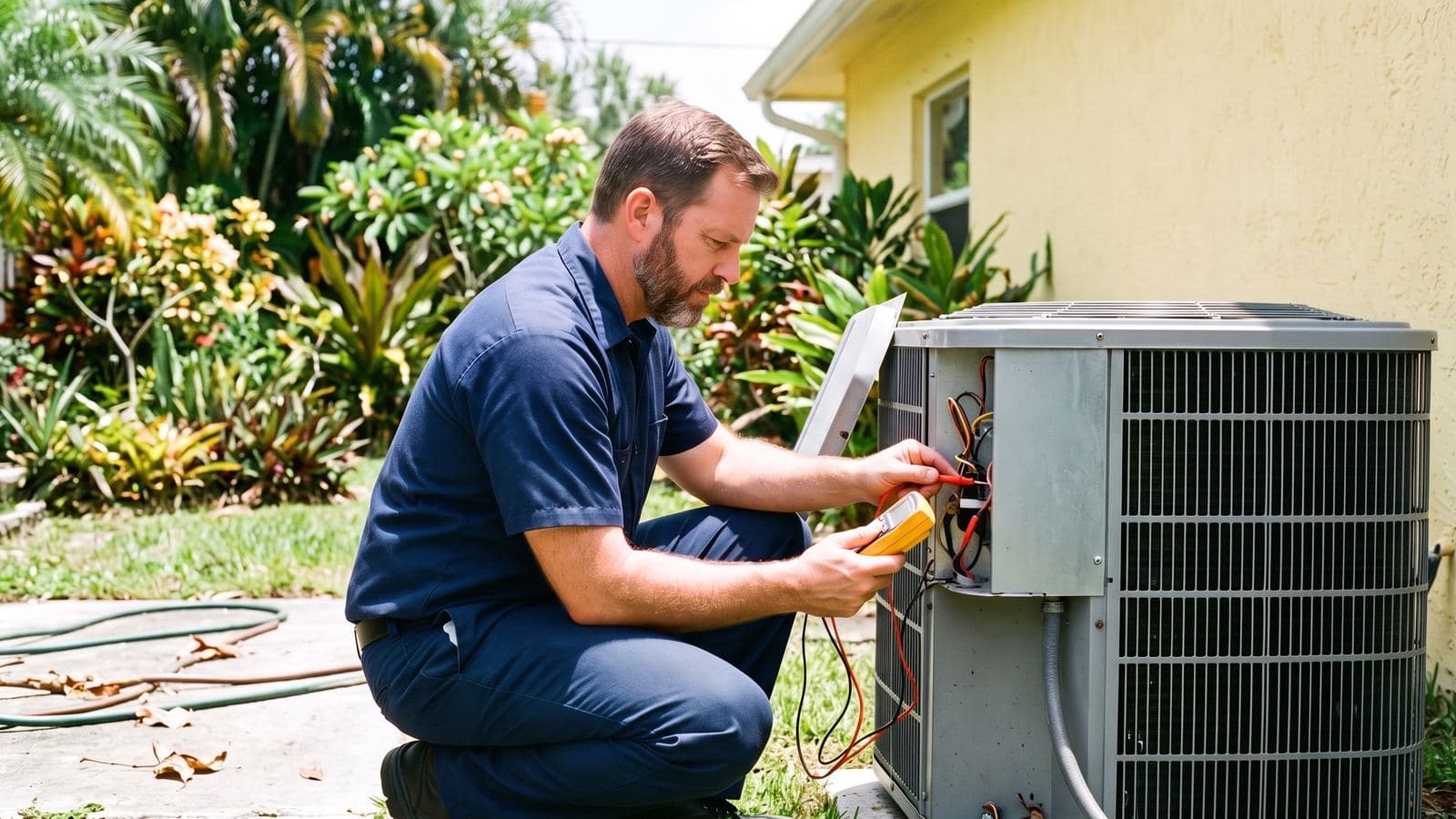
This is the window for a full professional tune-up: refrigerant pressure check, electrical connections tightened, capacitor tested under load, blower cleaned, coils inspected, and the condensate system flushed properly rather than just poked at.
If your system is older and you have been putting off a decision, this is also the right time to have it evaluated. Replacing equipment in February is a scheduled project. Replacing it in August is a crisis.
Late Spring (April to May): Get Ahead of the Heat
Before the first genuinely hot stretch:
- Replace the filter and note the date somewhere you will see it.
- Clear two feet of space around the outdoor unit — plants grow fast here and often crowd the condenser without anyone noticing.
- Rinse the outdoor coil gently with a hose from the inside out, with the power off at the breaker.
- Pour a cup of distilled vinegar down the condensate drain line access to slow algae growth.
- Test the system on a cool day: set it low, let it run twenty minutes, and confirm the air is genuinely cold and the drain is flowing.
Finding a problem in April means a scheduled repair. Finding the same problem in July means a same-day emergency call.
Summer (June to September): Watch, Do Not Ignore
During peak season, the goal is early detection. Systems rarely fail without warning — they usually give you two or three weeks of small signals first.
Check the filter monthly, not quarterly. Listen for new sounds. Notice if rooms that used to match now differ by several degrees. Watch for water near the air handler, which means the condensate drain is backing up — the single most common summer service call in South Florida.
Also pay attention to humidity. If the house feels clammy at the same thermostat setting that felt fine last year, the system is losing its ability to dehumidify, which is often the first measurable sign of decline.
This is also hurricane season, which carries its own preparation — see our guide on protecting your AC during storm season.
Fall (October to November): Recover From the Season
After running flat out for months, the system deserves attention. Rinse the outdoor coil again — a summer of use leaves it dirtier than most people expect. Replace the filter. Check that storm season has not shifted the unit off level or left debris packed against it.
This is also a good time to note how the system behaved over the summer. Did it struggle on the hottest days? Did the electric bill climb noticeably compared to last year? Those observations are the data that make a repair-or-replace conversation useful.
What You Can Do and What You Should Not
Filters, clearance around the outdoor unit, gentle coil rinsing and drain line treatment are all reasonable homeowner tasks. Refrigerant, electrical components, and anything requiring the unit to be opened are not — they are licensed work in Florida for good reason.
Twice-yearly professional service is the standard we recommend for this climate, not the annual visit that suits milder states. Our maintenance plans are built around that cadence and include priority scheduling when something does go wrong. Ask us what makes sense for your system's age and condition.